
Embroidery for Beginners: The Easy Way to Start
How to Start Embroidery if You’ve Never Stitched Before
Starting embroidery can seem difficult at first. But the good news is that embroidery is one of the easiest creative hobbies to start at home and very relaxing. With a few basic supplies and a simple project, you can start learning essential stitches and enjoying the process much faster than you might think.
What do you need to start embroidery?
You only need a few basic supplies to begin:
- pre-printed embroidery fabric
- embroidery floss
- embroidery needles
- embroidery hoop
- small scissors
Ready to start stitching?
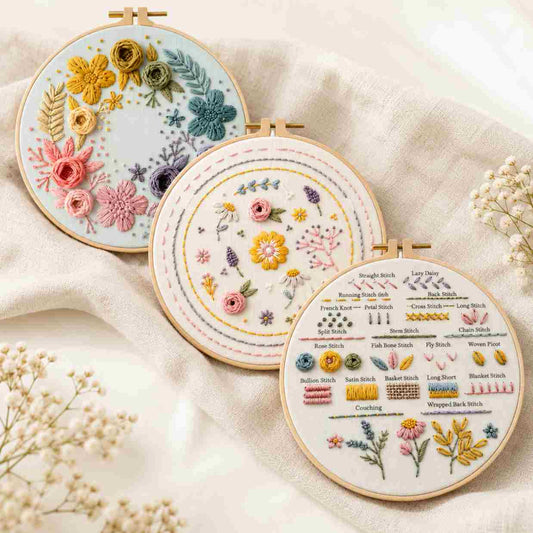
If you’re new to embroidery, these beginner-friendly kits are a lovely place to start.


That may sound like a lot at first, but once you have the basics in front of you, embroidery feels much easier. Many beginner-friendly kits already include these essentials, which makes it easier to get started without having to figure everything out on your own. That’s why an all-in-one embroidery kit is a great option for beginners.
A pre-printed design makes embroidery much easier for beginners because you already know where to start. Instead of spending time transferring a pattern, you can focus on practicing stitches and enjoying the process.

Which embroidery stitches should beginners learn first?
If you are just getting started, it is best to begin with a few simple stitches that are commonly used in many designs. Some of the most helpful beginner stitches are Back Stitch, Stem Stitch, Satin Stitch, Lazy Daisy, and French Knot.
The easiest way to start embroidery
If you are new to embroidery, an all-inclusive beginner kit is one of the best ways to start. It includes everything you need, along with a pre-printed design with stitch names, enough thread, needles, a hoop, a seam ripper, a needle threader, scissors, and both printed and video instructions.
Helpful Beginner Tips Before You Start
-
Place the fabric in the hoop properly.
Make sure the fabric feels smooth and secure, but not stretched too tightly. -
Cut a comfortable length of thread.
Very long thread can twist, knot, and tangle more easily while you stitch. -
Start with a simple design.
A beginner-friendly pattern will feel much less overwhelming than a very detailed one. -
Do not pull the stitches too tight.
Pulling too hard can change the shape of the design. -
Focus on one stitch at a time.
Trying to do everything at once can feel confusing in the beginning. -
Do not worry about perfection.
Your first project is not supposed to look perfect right away. Just get comfortable with the stitches and enjoy the process.
Ready to give embroidery a try? Our beginner embroidery set includes the essentials, a pre-printed design, stitch names, and both printed and video instructions to help you start with confidence.